
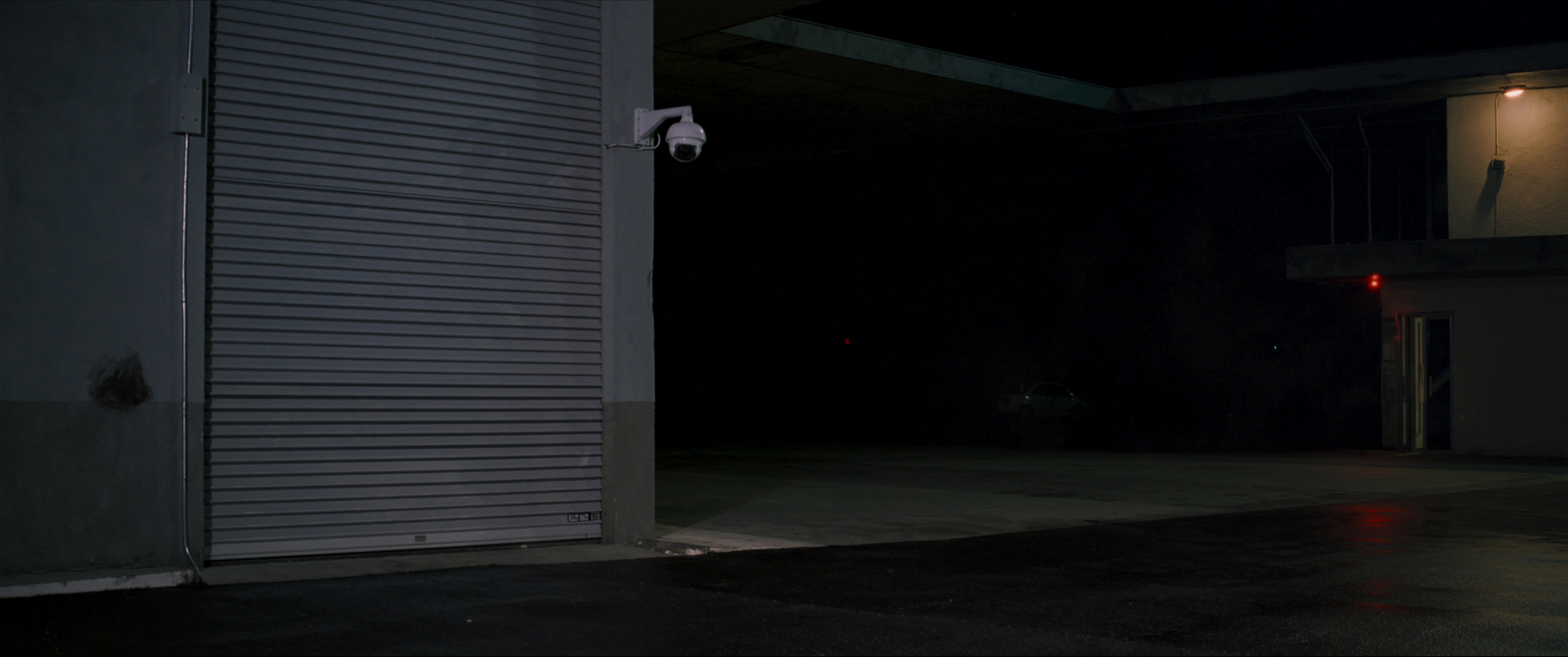
His previous alarm system failed and the business was ransacked. Seven months after Epic installed, the thieves came back — and this time they were caught.
It had already happened once
He already had an alarm system when his business was broken into. It didn’t do its job, and the place was ransacked. That’s the part most people skip past — having a system is not the same as having one that works.
My last alarm system was a failure, and my business was ransacked.
Albert D., Orange County
He had us install a replacement. Seven months later the same thing was attempted again — and this time it ended differently.
What made the difference
Most people think of a security system as one thing. It’s really three, and a system that lets a business get ransacked usually does one of them well and the others not at all.
- Deterrence stops it being your building in the first place.
- Detection knows something is happening and tells someone who can act.
- Evidence is the difference between an incident and an arrest.
Resolution is not the whole story
A 4MP camera pointed across an entire parking lot and a 4MP camera pointed at one doorway record the same number of pixels. They just spread those pixels over very different amounts of world. The first gives you a person-shaped smudge in a hoodie. The second gives you a face.
This is why lens choice matters as much as the camera. A varifocal lens adjusts the field of view from roughly 116 degrees down to 34 — from a wide sweep of a yard to a tight frame on the one door somebody has to come through. Setting that angle is a decision made at installation, on site, looking at your building, and it does more to determine whether footage is usable than the specification on the box.
So the useful question isn’t “how many megapixels.” It’s what do you need to be able to recognise, and from how far away. A camera covering a wide yard for context and a second one framed tight on the entry point will out-perform one expensive camera trying to do both jobs at once.
The other three things that decide whether footage is usable
- Night. Most break-ins are not well lit. The 4MP exterior cameras we use on entry points carry infrared illumination out to around 95 feet, which keeps a face recognisable after dark rather than reducing everything to a silhouette against a security light.
- Where the camera goes. Mounted too high, a camera looks down at the tops of heads and hats — the classic reason footage shows a person and identifies nobody. Mounted at a sensible height on the approach to a door, it looks at faces. Height and angle are placement decisions, not product decisions, and they’re the ones we spend time on when we quote the job.
- What’s recording. Live viewing on your phone and recorded footage are not the same stream. Cameras can record continuously at full resolution while the live feed you watch remotely runs lighter so it loads quickly on a phone. If somebody shows you a crisp live view, that doesn’t by itself tell you what will be sitting in the archive the following morning. Ask.
The thieves struck again 7 months later, but were caught because the alarm system actually worked and worked well, and the camera systems are high res and you could easily make out faces in minute detail.
Albert D., Orange County — published on Yelp, July 2015. Quoted as written.
Where the recordings live, and how you get them
There are three ways footage is kept, and they behave differently — which is the main reason “how long do you keep footage?” has no single answer.
- Clips in the cloud. When something triggers a recording, a short clip is uploaded and kept in your account. These aren’t kept for a set number of days — your account holds a set number of clips, and once it’s full the oldest makes way for the newest.
- On the camera. Each camera can record to a card inside it. Simple, nothing else to install, and it keeps working even if the network doesn’t.
- On a recorder. Larger sites use a recorder instead, with the cameras associated to it. One place to search, and it doesn’t matter how many cameras are pointed at the problem. A recorder is additional equipment, so there’s a cost to supplying and installing one — we’ll tell you whether your site actually needs it rather than defaulting to the bigger number.
How long footage lasts — the honest answer
There is no single number, and anyone who gives you one without asking about your site is guessing.
Nothing here expires on a timer. Recordings are displaced by newer recordings, which means the real question isn’t how many days — it’s how much happens in front of your cameras. A camera watching a quiet stockroom will hold months. The same camera watching a busy forecourt will hold a fraction of that, because there’s far more happening for it to write down. Recording at full resolution rather than a lighter setting can be the difference between weeks and days on the same card.
The trade is real and it’s yours to make: higher resolution, or a longer history. More storage buys you both, which is why it’s worth deciding at installation what you would actually want to go back and look for, and how far back. If there’s a specific scenario you’d want to be able to reconstruct, tell us when we’re quoting and we’ll size the storage for it.
If something happens, do this first
If there’s a clip of it, lock it. Clips can be marked as protected from the app, and a protected clip is exempt from being overwritten when the rest make way for newer footage. It takes seconds and it’s the single most useful thing you can do in the first hour, because it takes the one recording that matters out of the queue for deletion.
Do it before you call anyone — us, the police, your insurer. The clip you protect on the day is the clip that’s still there in three months when somebody finally asks for it.
If you need us to pull it for you
You can do this yourself from the app, on a timeline rather than by scrubbing through hours of nothing. But if it’s evidence, or you simply don’t want to be learning an interface on the worst morning of your year, we will retrieve it for you. Tell us the date, the time window and roughly where to look, and we’ll go and get it. We don’t charge you for that.
One thing worth knowing now rather than later: ask early. Requests that come in within days of an incident are straightforward. Requests for footage from months or years ago usually are not, and sometimes can’t be answered at all — the recording is long overwritten, or the site has changed hands, or the equipment is no longer where it was.
Been hit before?
Tell us what happened and what your current system did. We’ll give you a straight answer about what would have to change. Get a free quote, or read more customer stories.
More on this: HD video surveillance · small business security · 24/7 monitoring